Vinson FAQ
7 Summits Home | Everest | Aconcagua | Carstensz Pyramid | Denali | Elbrus | Kilimanjaro | Kosciuszko | Mont Blanc | Vinson | Compare the 7 Summits | Climb for Alzheimer’s
2011 Climb Dispatches: Vinson 2010 | Aconcagua 2011 | Everest 2011 | Denali 2011 | Elbrus 2011 | Kilimanjaro 2011 | Carstensz 2011 | Kosciuszko 2011
I climbed seven of the eight Seven Summits in 2010/11. It took 18 airlines, 58 flights, 116,112 miles flown, 120 time zones and 201 nights away from home over 322 days to raise awareness and research funds for Alzheimer’s, and to honor my mom, Ida Arnette, who was taken by this disease in 2009. Read the 7 Summits overview.
Here are some common questions about climbing Vinson. I am focusing on the normal route and the one I took in 2010 as part of my 7 Summits Climb for Alzheimer’s: Memories are Everything® expeditions. Click here to find official information about the campaign. Since I am not a guide nor a professional climber, this information is based on my experience and are my opinions so always consult with a professional before making any serious climbing decisions!
About Vinson
Q: Where is Vinson
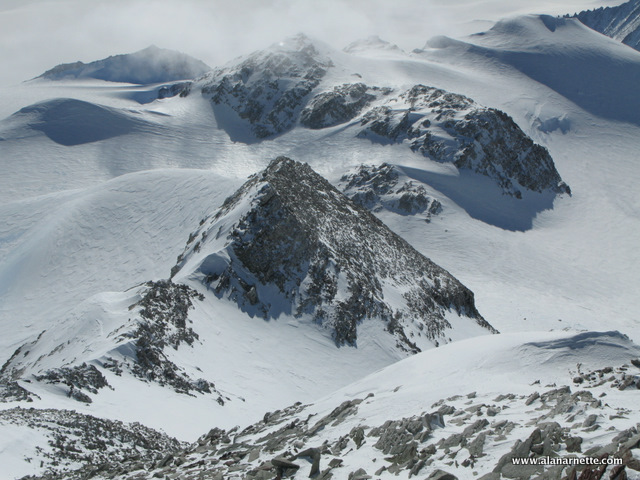
A: 600 miles from the South Pole, Mount Vinson was first summited in 1966 by climbers led by Nicholas Clinch from the American Alpine Club and the National Science Foundation, it was the last of the 7 Summits to be conquered. It was named after US Senator and Antarctica supporter, Carl Vinson. It is in the Sentinel range of the Ellsworth Mountains. Just getting there is an adventure involving a 4 hour, 2000 mile plane trip on a Russian IIyushin 76 cargo plane or a modified Boeing 757 from the tip of South America to the snow camp of Union Glacier. Once there climbers are ferried another 35 minutes via a Twin Otter to Vinson base camp. View Vinson on a larger map.
Q: When is it usually climbed?
A: Climbs usually take place between December and February. – the 24 hours of sunlight a day summer in Antarctica.
Q: I understand that Vinson is easy.
A: It is straightforward with mostly glacier travel but the climbing is not the challenge for Vinson; it is the weather and the logistics of getting in and out of Antarctica.
Q: How does Vinson compare with Denali or Rainier?
A: It is easier than Denali since it is shorter – if the weather is not brutal. We sat in our tents at Low Camp for 6 days waiting for 50 mph winds to ease on the summit ridge. Similar to Denali, you are pulling a sled with personal and group gear but the loads are lighter. Even though the summit is about 16,000′, the effective altitude is about 2,000′ higher.
Q: Is a Vinson climb dangerous?
A: Absolutely. While there have been no deaths on Vinson, which is remarkable, there are cases of serious frostbite. The primary issue is that in case of a life threatening emergency, it could be days or weeks to get you back to a full hospital given the severe weather conditions.
Q: How many people had summited and how many people had died trying?
A: An estimated 3,500 climbers have summited Vinson at an extremely high success rate in the 90% range. It’s the only peak of the 7 Summits with no reported deaths.
Training, Gear & Communication:
Q: How did you train for this climb?
A: My normal of climbing my local Colorado 14ers plus daily workouts with weights and on an elliptical machine.
Q: Was altitude a problem on this climb?
A: Not a big issue given it is 16,000′. However the barometric pressure is quite low at both Poles so the available oxygen per breath is lower than the given altitude compared to other big mountains thus from a cardiovascular perspective, it felt like it was 18,000′.
Q: What kind of equipment did you use?
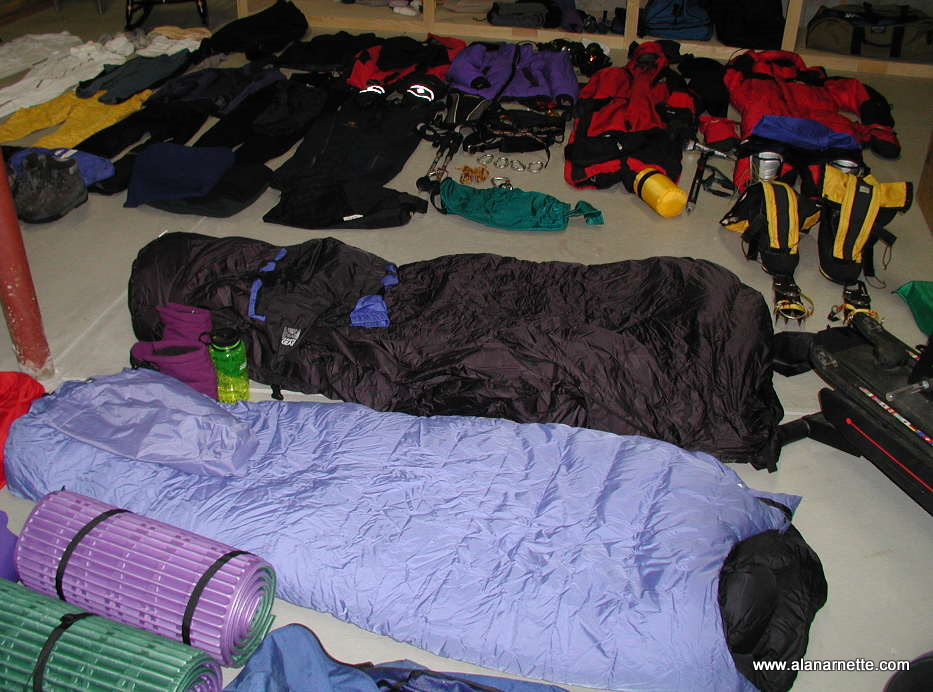
A: Mostly I use the same gear I used on Everest. Lot’s of layers. My personal technical equipment included a long handle ice axe, harness, carabineers and crampons. It is always critical to protect my toes, fingers and face since these were most susceptible to frost bite. As for warmth, I always wear a knit cap and at least liner gloves when I get the least bit cool – regardless of the outside temp. I use a 3 layer system of Merino wool base layer (top and bottom), heavier fleece as in the Mountain Hardware Power Stretch (a Farmer’s John kind of suit) or just my Patagonia Guide Pants depending on how cold it is that day then my top wind or warmth layer e.g. Patagonia Micro Puff and/or JetStream Shell. When the winds pick up and the temps hover at -30F, I add my Feather Friends 850 Fill down jacket plus my mitts which I never used on Vinson. I have a gear page for reference. I am very pleased with all my gear but had a few standouts that I note on my gear page.
Q: Anything special in your gear for Vinson?
A: I tool almost everything on my gear page under 8000m climbs except the full down suit. It can be extremely cold and windy so multiple down layers are required. My boots were the Kayland 8001, an integrated gator boot with a separate inner boot similar to the Millets or Olympus Mons. Some people climbed in double plastics with overboots. I was never cold. I used a new sleeping back from Mountain Hardwear, the Wrath -20 and was very pleased. Also used the ExPed Down mat 9 on top of a z-pad. I was warm and comfortable.
Q: Did you use a satellite phone?
A: For details on my expedition communications, please see this tutorial. I used an Iridium phone with good results to post updates to this website. I used HumanEdge technology’s Contact 5 expedition dispatch software.
Expedition Basics
Q: Which route is most popular?
A: There is really only one primary route from the West side which follows the Branscomb Glacier with two intermediate camps. In 2001 a team climbed via the East Face. In late 2008, one team climbed via the Dater/Hinckley glaciers to the Shinn Col before joining the normal route.
Q: How long will it take?
A: A Vinson climb can be incredibly short. With zero weather delays, you can arrive at Union Glacier, fly to Vinson Base Camp, climb to Low Camp then High Camp and summit plus return in about a week. But this almost never occurs. Count on three weeks with weather delays.
Q: How much does a standard climb cost with and without a guide?
A: The costs can range from $55,000 to $60,000 depending on who you use. See my Guide page for more details. The cost is so high due to the logistics of just getting to Antarctica. Once you are there you can see why .
Q: Do I need a permit to climb?
A: There are no permits but you must use Antarctic Logistics and Expeditions(ALE) to fly to Antarctica since they are the only ones to fly there.
Q: Do I really need a guide for Vinson?
A: Yes, ALE requires a guide to climb unless they approve you as an exception with proper experience and a team of 3 or more – don’t count on it. They can provide a guide or any of the other guide companies will provide one. You must bring a two-way radio and a sat phone in my opinion and have the frequency or number of the local rescue resources already programmed in.
Q: How do you get on an expedition to climb Vinson?
A: Most reputable guides ask for your climbing resume and require some climbing experience. Ideally they want to see climbs of Rainier or Colorado or California 14ers. But most anyone can get on a Vinson commercial expedition these days without many questions. The guide services all run the same basic formula and are very conservative with weather, safety and risks. I believe ALE has a minimum age of 18 to fly to Antarctica.
My 2010 Experience

Q: Did you summit?
A: Yes, on December 9th, 2010. We arrived in Punta Arenas on November 27, flew to Union Glacier the next day and then to Vinson Base Camp on November 30th. We did a carry to Low Camp and returned to BC. Next was a move to Low Camp and a carry to High Camp. Then the winds picked up and we were stuck at Low Camp for six days. When it relented, we moved to High Camp and summited on Dec 9. The return was swift – about 24 hours but then we waited out another weather deadly at Union Glacier for three days. It was 3 weeks from home to home.
Q: Why did you choose International Mountain Guides?
A: Phil Ershler is the simple answer. Phil has been guiding to Antarctica since the 1980’s and has summited over 15 times. Phil is a legend in climbing with ground breaking efforts on Everest, K2 plus 25 summits of Denali and close to 450 summits of Rainier. Also I was climbing most of the 7 Summits with IMG throughout 2011.
Q: How did they perform?
A:Very, very well. Phil showed his experience and skills throughout the climb. We had a variety of skills on our team and Phil was careful to look after everyone, along with a Junior guide – Aaron. I would climb anywhere, anytime without question with Phil and I never have said that about any guide.
Q: Which route did you take?
A: The standard route via the Branscomb Glacier. We had Base Camp at 7300′, Low Camp at 9100; High Camp at 13,200′
Q: What kind of weather conditions did you have?
A: It was cold – but overall very nice. The daily temp was between -20F and +20F in the still air. We had a couple of days of winds at 15 mph with gusts over 30. We stayed in our tents or the Posh hole those days. There were high winds on the the summit ridge which caused us to stay at Low camp for 6 days but when there was no wind, it was quite comfortable even in below zero air temps.
Q: Did you use bottled oxygen?
A: No, supplemental oxygen is usually only used above 26,300′.
Q: Would you climb Vinson again?
A: I would return to Antarctica in a finger snap. it is a special place and a privilege to visit for any reason – climbing or otherwise.
Bottom Line
Vinson is a spectacular climb in an unique area. While not technically challenging, there are issue with weather and logistics. However, just getting to go there was a privilege.
Memories are Everything®
Alan Arnette is an Alzheimer’s advocate for individuals, their families and anyone impacted by this disease through his professional speaking, climbing and website.
His objectives for the Memories are Everything® climbs are:
- Educate the public, especially youth, on the early warning signs and how to prepare
- Increase awareness that Alzheimer’s Disease has no cure
- Raise research money for Alzheimer’s non-profits
He has completed two major projects:
- NO CURE, always fatal
- No easy, inexpensive method of early detection
- 3rd leading cause of death in the US
- New case every 68 seconds, 4 seconds worldwide
- Impacts more than 5+m in US, 25m+ worldwide
- Devastating financial burden on families
- Depression higher for caregivers
- Issues are increasing rapidly as population ages

The Alzheimer’s Immunotherapy Program of Janssen Alzheimer Immunotherapy and Pfizer Inc. funded my climbs for the 7 Summits campaign and ongoing efforts between November 2010 and November 2012. All money I raised then and now from donations goes directly to the organizations I have selected. During the campaign, content posted here was my own but subject to certain limitations in conjunction with the support of the AIP.
Preparing for a Climb is More Than Training
Summit Coach
From Your First Summit to Everest. One Coach, the Whole Way.
Planning your next big climb? Work one-on-one with Alan Arnette, Everest and K2 summiteer, for personalized training plans, independent guide-service advice, gear recommendations, and experienced support from preparation through expedition.
No commissions. No conflicts. Just advice focused on your success.
www.alanarnette.com is provided for informational purposes only and not for advice except through Summit Coach services.
Please see the complete disclaimer.